Los Angeles underground drainage infrastructure consists largely of aging vitrified clay and unlined cast-iron mains that fail under soil movement and botanical pressure. A sewer camera video inspection provides visual…
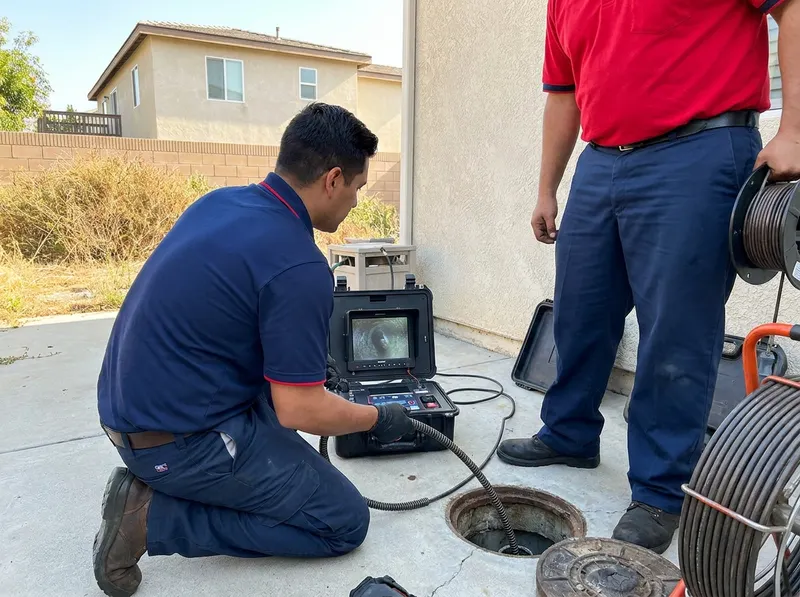
Los Angeles underground drainage infrastructure consists largely of aging vitrified clay and unlined cast-iron mains that fail under soil movement and botanical pressure. A sewer camera video inspection provides visual verification before undertaking intrusive excavations. In hillside pockets such as Silver Lake, Los Feliz, and Echo Park, historic ground shifting routinely fractures rigid clay hubs, allowing surrounding soil to enter the line. In coastal areas like Venice and urban corridors such as Koreatown, continuous high-volume usage and corrosive soil moisture corrode cast-iron pipe bottoms through channeling. The optical inspection clarifies whether standing water stems from a localized paper obstruction, heavy ficus root intrusion, or a shearing offset near the public sewer easement under the street. An accurate assessment prevents unnecessary street-opening permits from the Los Angeles Department of Public Works.
Decision guidance dictates that an optical camera check must precede mechanical snaking if waste lines exhibit bubbling fixtures, repeated whole-house backups, or sewer gas odors. Mechanical cable cutters clear soft clogs, but running a rigid blade through cracked clay or thinned cast iron risks puncturing the pipe wall. The visual scan confirms wall thickness and joint alignment before high-pressure hydro-jetting or line rehabilitation occurs. The inherent trade-off involves access: running an inspection through an accessible ground-level cleanout costs less than pulling a toilet or climbing to a roof vent. If a 1920s bungalow in Highland Park or Boyle Heights lacks an exterior cleanout, pulling a ground-floor toilet adds labor time and requires an explicit gasket replacement.
During property transactions in Westwood, Brentwood, and Sherman Oaks, sewer scopes protect buyers from unrecorded lateral failures beneath extensive hardscaping. A 512 Hz sonde transmitter integrated directly into the camera head works synchronously with a digital ground receiver. This allows the operator to mark the exact surface depth, flow pitch, and directional path of the lateral line under concrete driveways, flagstone patios, or historic parkways. Step 1 entails locating the primary 3-inch or 4-inch access point. Step 2 requires pushing the push-rod fiber-optic line through to the city saddle connection while monitoring high-resolution video footage. Step 3 concludes with logging the precise footage distance where obstructions or breaks occur, followed by saving the digital inspection file for permit reviews or trenchless lining estimates.
Every job gets a firm, written price after a free on-site visit.
Tell us about your sewer camera video inspection job in los angeles and we'll send a clear, written quote, usually the same day.
 LA HomeFix Experts