Gas tank water heater replacement in Los Angeles requires specific structural and safety adaptations dictated by regional building codes and domestic architecture. Under California Plumbing Code Title 24, every…
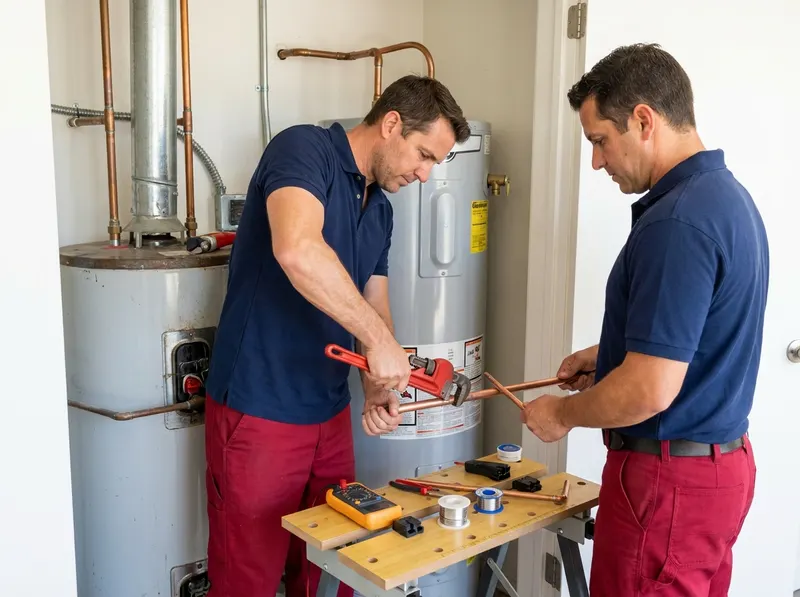
Gas tank water heater replacement in Los Angeles requires specific structural and safety adaptations dictated by regional building codes and domestic architecture. Under California Plumbing Code Title 24, every residential gas storage tank must be secured with two heavy-gauge steel earthquake straps bolted directly into wall studs, one placed within the upper third of the cylinder and one in the lower third, to prevent gas line ruptures during seismic movement. In older architectural pockets such as 1920s Craftsman bungalows in Highland Park, Spanish Revivals in Silver Lake, or pre-war multi-family flats in Koreatown, water heaters are often located in tight exterior service closets or unconditioned basements. These locations frequently feature aged galvanized supply piping that requires dielectric unions to prevent galvanic corrosion when joining new copper water lines. Modern installations also mandate a thermal expansion tank when backflow preventers or closed-loop municipal pressure-reducing valves are present along main water services.
Selecting the proper unit depends on household demand, recovery ratings, and fuel ventilation paths. A standard 40-gallon atmospheric gas tank suits households of 2 to 3 people with a first-hour rating of approximately 65 to 70 gallons, whereas a 50-gallon gas tank delivers 80 to 90 gallons per hour for homes with 4 or more occupants in neighborhoods like Brentwood or Sherman Oaks. If venting routes must navigate retrofitted interior layouts or hillside foundations near Echo Park Lake and Elysian Park, a direct-vent or power-vent system using powered blowers and PVC/CPVC pipes replaces natural drafting vents that depend on vertical B-vent metal chimneys. The trade-off between standard atmospheric and power-vent models centers on utility infrastructure: atmospheric models function during electrical power outages without grid electricity, whereas power-vent units require a nearby 120-volt electrical outlet to exhaust combustion gases safely through exterior side walls.
Executing a field replacement follows an orderly diagnostic and mechanical sequence. 1. Technicians isolate the gas supply valve and municipal cold-water feed, draining the residual 40 to 50 gallons of sediment-laden water through a directed hose line. 2. The existing appliance is disconnected from the flue exhaust, gas line, and water couplings, followed by safe extrication from the utility closet or basement. 3. The new gas tank is positioned atop an approved water heater stand if installed in an automobile garage, raising the pilot light and ignition source a mandatory 18 inches above the floor slab to mitigate flammable vapor ignition risks, or set directly on an approved drain pan inside living spaces. 4. Mechanics connect rigid or flexible corrugated stainless steel supply lines, install a clean sediment trap (drip leg) on the gas inlet, bolt seismic brackets into structural framing, run 3/4-inch copper relief lines for the temperature and pressure (T&P) valve directly to the exterior, and light the pilot to test combustion efficiency and gas joints using electronic sniffer sensors.
Every job gets a firm, written price after a free on-site visit.
Tell us about your gas tank water heater replacement job in los angeles and we'll send a clear, written quote, usually the same day.
 LA HomeFix Experts